LIVE
Howard Chasolen Education Events
IN PERSON
Full Day At Your Venue
- full day (7.5 hours) in-person presentation at your venue
- unlimited attendees including dentist, auxiliary team member, lab technician
- vendor sponsors welcome
REMOTE
3 Virtual Sessions
- remote Zoom, Google Meet, or Teams
- unlimited attendees including dentist, auxiliary team member, lab technician
- vendor sponsors welcome
PERIODONTISTS AND YOUR RESTORATIVE TEAMS
Are You Ready to Change Your Practice Forever
Restorative Excellence
The Lost Art of Saving Teeth in the Titanium Age
A Restorative and Periodontal TEAM APPROACH
DO YOU AND YOUR RESTORATIVE TEAMS WANT TO DISCOVER AN ENTIRELY UNTAPPED SOURCE OF TREATMENT?
DO YOU WANT TO SAVE MORE TEETH THAT NEVER HAD BE EXTRACTED IN THE FIRST PLACE????
PERIODONTISTS ARE YOU TIRED OF GUESSING AT BIOLOGIC WIDTH CORRECTION?
DO YOU AND YOUR RESTORATIVE DENTISTS WANT TO MAKE FINAL IMPRESSION/SCAN DAY A BREEZE?
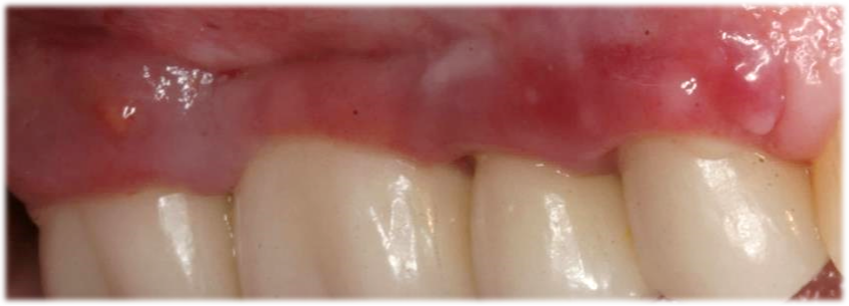
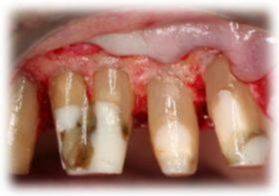
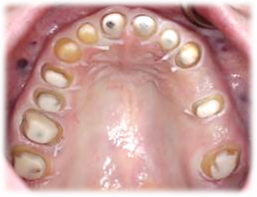
Are You TIRED of seeing this?
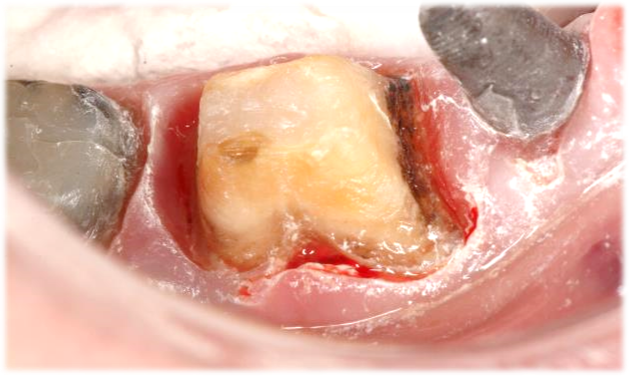
And This?
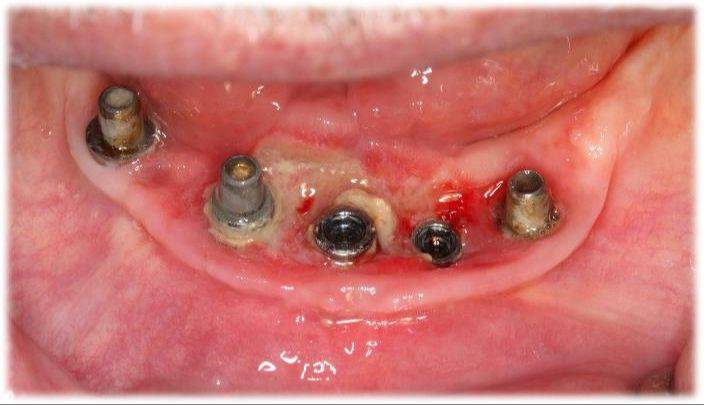
Or This?
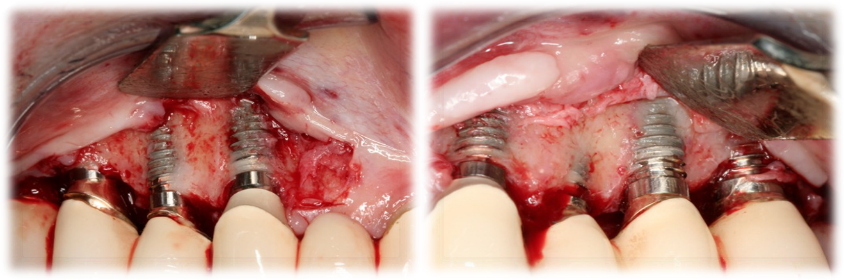
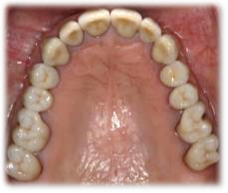
And This?
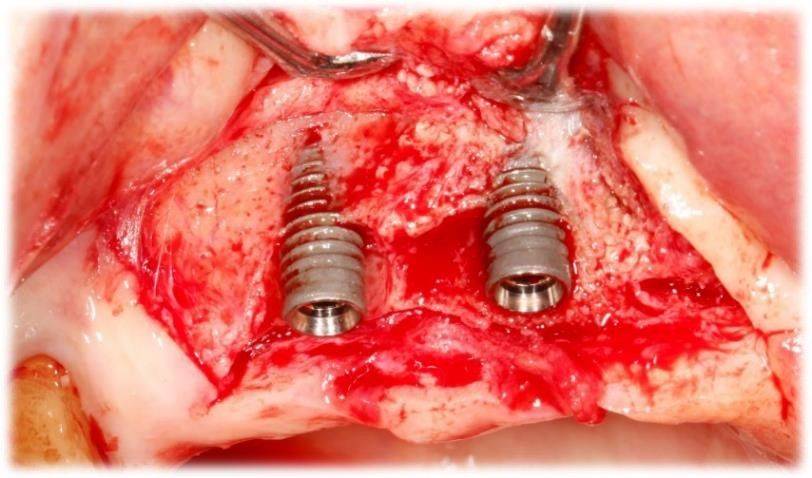
And This?
TIRED OF HAVING TO DO REPAIRATIVE PROCEDURES AROUND IMPLANTS….
TIRED OF HAVING TO CORRECT BIOLOGY AFTER THE RESTORATIVE FACT???
I CAN AND WILL SOLVE THIS FOR YOU AND YOUR TEAM
I GUARENTEE I CAN HELP!
Howard Chasolen, DMD, FAAID, FACS- Specialist in Prosthodontics, Sarasota, FL
After practicing the specialty of Prosthodontics for 32 years, and encountering the most complex of restorative, occlusal and implant clinical presentations, the one thing I know for certain is that patient success is realized by mastering the fundamentals. AND THAT WE ARE REMOVING FAR TOO MANY TEETH THAT SHOULD BE SAVED IN FAVOR OF PLACING IMPLANTS.
I firmly believe that even the most advanced technology cannot be compensated for a lack of attention to the details of fundamental biologic, material and mechanical principles. The single most critical factor in long term restorative success is by far, the handling of the replacement of old dentistry. Specifically, caries removal, perfectly clean adhesive cores and provisionals, the respect and correction of the periodontal/restorative interface and the placement of definitive restorations in a perfectly biologically pristine environment.
This being followed by a thorough understanding of treatment planning and treatment plan formulation. Understanding the properties of today’s restorative ceramic materials and margin designs in combination with the proper handling of the subgingival and equigingival environment will ensure long term success. There are specific and repeatable protocols to achieve this success time after time.
PROGRAM ITINERARY
This program details a step-by-step repeatable approach to mastering successful restorative and cosmetic dentistry, from diagnosis to delivery.

SAVING TEETH VS PLACING IMPLANTS
I always say, “never diagnosed, never treated.” It is critical to master the diagnosis of clinical conditions that mandate or at least lead us to a perio-restorative treatment protocol. Without a clear diagnostic map, we will miss so many opportunities to help our patients become healthier, benefit from meticulous esthetic and biologic restorative dentistry and maintain it for years. In this section you will learn:
1. Why implants are not always the best option and what can happen when implant treatment goes wrong.
2. WHY AND WHEN do I need to use this protocol. The specific clinical conditions that indicate a perio / restorative treatment protocol.
3. Understand that marginal teeth, when treated appropriately, can be saved predictably over a long period of time.
4. Realize that the proper treatment intervention at the correct time used with early perio / restorative issues can save teeth for a lifetime.
5. Review the relevant literature on the topic of perio / restorative treatment and gain an understanding of the long -term results.

HOW TO SAVE TEETH
Many of us have become so excited with new and exciting technologies. But, we have lost the ability to actually save a tooth with a simple restorative protocol. Teeth with old restorations or early furcations being planned for extraction in favor of titanium. I will show you exactly how to save teeth by
1. FIXING THE FOUNDATION (PERIO). This includes biologic width, furcations, developmental grooves and lack of attached tissue.
2. FIXING THE HOUSE (RESTORATIVE). Defective restorations, caries removal, cores, provisionals and definitive restorations.
In order to do so, we must understand the subgingival condition, place a core and provisional first, correct the periodontal condition surgically, allow proper healing and restore meticulously. I will show you every step in detail

CORES AND PROVISIONALS- THE BIOLOGIC TEMPLATE FOR SUCCESS
A core is the foundation for all restorative dentistry. It serves as the esthetic and biologic template for the restorative process. And a core MUST be performed prior to any periodontal correction, or the perio restorative interface may not be established correctly. A step-by-step detailing of how to remove old dentistry, be certain all old restorative material and caries are removed and the placement of an adhesive core and surgical provisional will be covered. Emphasis will be placed on the exact protocol, materials and instrumentation used to produce predictable and perfect results. Without a core, effective perio-restorative treatment is not possible.
By the same standard, a provisional restoration is not just a placeholder. It is a blueprint to a successful biologic, aesthetic and functional restoration. A complete review of different techniques and materials will be presented. Provisional restorations are necessary for 360 degree access for successful periodontal correction and biologic shaping. The rationale, steps and protocols will be detailed for fabricating and facilitating easy removal of provisionals by the periodontist.
1. Learn how to remove old restorations, old restorative materials and accomplish complete caries removal.
2. Learn why a core buildup is the most foundational aspect of crown and bridge restorative dentistry.
3. Master a cookbook process of the entire adhesive core build-up process.
4. Learn the current state of the art and science in adhesive practices and philosophy.
5. Learn how to perform a perfect core even in a subgingival environment.
6. Understand how to refine the core buildup using the exact burs, instruments and finish lines to facilitate periodontal correction if necessary.
7. Learn the available materials and techniques to make provisional restorations you can be proud of.
8. Make provisional restorations that support aesthetics, occlusion and biology.
9. A review of direct and indirect techniques as well as an in depth discussion of PMMA vs, Bis-acryl materials.
10. Finishing, polishing and cementing protocols are discussed in an easy to repeat fashion.
11. The process- how to get the patient ready for the periodontist. From a clinical, support materials and understanding perspective.

SURGICAL CORRECTION- THE PERIODONTIST’S PERSPECTIVE
For outstanding perio/restorative outcomes, a healthy subgingival environment is essential. This means eliminating subgingival furcations, root concavities, divots, abfractions and defects. While patient hygiene certainly plays a role, achieving long term success depends on idealizing and correcting this environment with biologic shaping and soft tissue grafts. In this section, I will cover the basic principles of surgical correction. As I am not a periodontist, I do not perform these procedures myself, but have had the great fortune of benefiting from working with Dr. Danny Melker and sharing clinical images of all of our cases. Truly, you can not have a real appreciation of the benefits of this surgical correction without visualizing the subgingival environment directly through flap reflection. In this section, I will cover:
1. The principles of furcation management with BIOLOGIC SHAPING
Incorporation of soft tissue grafts to ensure the long term success of your restorative work and minimize further periodontal and restorative breakdown.
3. Why root concavities can destroy a beautiful case by harboring calculus and how to correct this problem.

THE 4 WEEK RELINE- FACILITATING HEALING WITH ROOM TO GROW
After surgical correction, a specific provisional management protocol is required. There are exacting biologic reasons for performing the provisional reline at the 4 week postoperative mark. This timing allows for initial tissue healing while also providing the necessary space for continued coronal migration and maturation of the attachment. This is crucial for long-term success. If you don’t nail this visit with meticulous attention to detail, the outcome will certainly be compromised. In this section you will learn:
1. Who does what… the role of the periodontist and restorative dentist through the first 4 weeks of post surgical care.
2. The management protocols for the first 4 weeks following periodontal corrective surgery.
3. The concepts and rationale for relining provisional restorations at the 4 week post op visit.
4. How and why we do not place the provisional margin at the tissue level.
5. Detail the exact technique provisional margin placement with respect to the tissue.
6. Detail the finishing and cementing protocols for the reline visit.

RESTORATIVE DESIGN
Now that such great effort has been made to get to the final restorative stage, it cannot be handled haphazardly. We want to prepare meticulously defined finish lines, capture perfect impressions or digital scans while managing the tissue with ultimate respect, detail well directed instructions and prescriptions to our laboratory, select not only the correct restorative material but design it with the most beautiful contour, deliver it a healthy dry environment with the best selected luting agent protocols. We are almost home with this great process; it’s time to get to the finish line with perfection. In this section I will detail:
1. Bur selection, margin design and margin position.
2. Impression versus intraoral scan…does it make a difference?
3. Soft tissue management and the retraction conundrum. How do we capture the margin in the most respectful way?
4. Restorative materials and their application. Do we even think about PFM or full gold anymore? I will discuss the current all ceramic material selection criteria and their application to our perio / restorative patients.
5. Restorative contours…there are very specific rules for restorative design. Especially so on periodontally treated patients. Don’t blow the case by ignoring these principles.
6. A protocol for delivering every case so there is ZERO anxiety about this critical final phase of treatment.
7. Cement selection- let’s simplify our menu of items to increase predictability.

OCCLUSION AND THE PERIODONTAL PATIENT
Occlusion is one of the most confusing and controversial topics in dentistry. Until recently, when digital workflows became the rage, occlusion was considered one of the most important components of restorative dentistry. However, there was and still is so much misinformation about occlusal philosophies and the effect the occlusion has on supporting structures. To complicate things, much research over the last 15 years has debunked many of our original occlusal doctrines and dogma. We have shifted much of our attention to parafunction and its potential destruction of supporting structures including joints, muscles, ligaments, cartilage, teeth, periodontium and restorations. We design an occlusion to survive the parafunction.
This could not be more important in the periodontally compromised patient, where loss of supporting structure is a major confounding factor in the progression of breakdown. In this portion of the program I will cover:
1. The basic concepts of occlusal philosophy.
2. Occlusal goals for healthy supporting structures and function.
3. Do inappropriate occlusal schemes initiate parafunction?
4. The concept of primary and secondary occlusal trauma.
5. The effect of parafunction on healthy versus periodontally involved dentitions.
6. Splinting- a debated but critical topic to review.
7. Occlusal considerations in the ortho/perio/parafunctional

FINAL RESTORATIVE- DETAILED CASE REVIEWS FROM BEGINNING TO END
In this section, I will present cases from my clinical practice. Most of the cases will be detailed from diagnosis to delivery reviewing every step of care. In most cases, this will include all of the surgical care as well. Many of the cases presented will be extremely challenging and illustrate all of the concepts presented so far, in a proof of concept fashion showing long term follow up results.
It is rare to see cases presented from diagnosis to delivery these days. It is even more rare to have the opportunity to see the long term follow up and objectively look at what worked and what did not. I will review and comment on my thoughts about what was done right and what could have been done differently in all of the cases.
If you can apply the concepts presented and stitch those concepts, philosophies and protocols into the case presentations, you will have a truly unique look and understanding of some of the most complex perio / restorative treatments imaginable. This will allow you to apply this material to your own patients immediately and achieve outstanding results on most every perio/restorative scenario you come across.

POST OPERATIVE MANAGEMENT- THE COMMITMENT TO CONTINUING
I counsel all of my patients that a great outcome is a shared responsibility. If they allow us to provide the recommended treatment, if we provide it it the highest level of care AND they continue to take responsibility for long term care through both professional care and personal care, great long term outcomes can be expected. This is easier said than done.
It amazes me how many people will invest great amounts of time, inconvenience and money into something and neglect to care for it shortly thereafter. We cannot follow our patient home, however we can certainly give them tools, resources, support and accountability parameters to help them continue to stay healthy.
I will share my 30 plus years of experience, protocols and recommendations for a well designed continuing care program.
INCLUDED IN THIS PROGRAM
- 7.5 Hours of PACE certified continuing education
- CE voucher of completion for AGD credit hours
- Comprehensive manual detailing every step of the program, protocols and cases including product information, educational resources and links to pertinent materials
- Links to all referenced literature supporting the treatment concepts and workflow
- Forms, consents, and sample documents supporting treatment for use with patients, referrals and staff
- document to ensure patients understand concepts and benefits of treatment protocol
PROFESSIONAL BENEFITS
- Distinguish your practice as unique in your area, with the ability to treat patients that no other practice has the training or tools to utilize
- Create an appeal to current and future referring practices that offers state- of- the- profession options to help their patients
- Allow you to provide non-implant options for patients that desire to save their teeth or for patients unable to go through the implant process due to medical, anatomical or financial reasons
- Professional satisfaction of knowing you are practicing at the highest clinical level
FINANCIAL BENEFITS
- Referrals incorporate cores into their everyday practice so at 2 cores per week at $400 per core, bottom line increase of $40,000/year
- Periodontists charging $4,000/quadrant biologic shaping and tissue grafts at one case per week realizes $192,000 increase
LIVE
Howard Chasolen Education Events
IN PERSON
Full Day At Your Venue
- full day (7.5 hours) in-person presentation at your venue
- unlimited attendees including dentist, auxiliary team member, lab technician
- vendor sponsors welcome
REMOTE
3 Virtual Sessions
- remote Zoom, Google Meet, or Teams
- unlimited attendees including dentist, auxiliary team member, lab technician
- vendor sponsors welcome